Telemetry, Qualitative Evidence, and the Observational Layer of Behavioral Simulation
How telemetry, qualitative evidence, and public discourse form the observational layer that grounds SAPIENS and synthetic populations in real behavior.
From Observation to Simulation
Modern digital systems record human behavior continuously. Every interaction with a product leaves telemetry. Every conversation with a company produces qualitative evidence. Every public discussion leaves traces of opinion across social platforms.
Taken together, these records form one of the largest observational datasets of human behavior ever created.
Yet most of this information remains underutilized.
Organizations collect behavioral signals at enormous scale, but the systems used to analyze them remain fragmented. Product analytics platforms examine telemetry. Research teams conduct interviews and surveys. Social listening tools monitor public discourse. Each captures a meaningful signal, but each captures only a partial view of behavior.
The challenge is no longer collecting behavioral data.
The challenge is integrating it into systems capable of explaining and eventually simulating how populations behave.
Fragmented Signals
Three major sources of behavioral evidence exist today.
Telemetry captures what people actually do inside digital systems. Every click, scroll, navigation path, and interaction becomes an event within a behavioral log. These records reveal how users move through products and where friction appears in real environments.
Qualitative evidence captures how people explain their behavior. Customer support calls, research interviews, product feedback sessions, and surveys contain detailed accounts of user motivations, frustrations, and expectations.
Public discourse captures how communities interpret events. Social platforms reveal spontaneous reactions to technologies, products, and cultural developments as they unfold.
Individually, each of these signals is incomplete.
Telemetry reveals behavior but rarely motivation.
Qualitative research explains motivation but across limited samples.
Public discourse reveals opinion but not always confirmed behavior.
Taken together, however, they describe different aspects of the same underlying system.
Human behavior.

The Observational Layer
When telemetry, qualitative evidence, and public discourse are integrated, they form something more fundamental: the observational layer of behavioral simulation.
Public discourse reveals emerging narratives and collective interpretation. Telemetry reveals how individuals behave within systems. Qualitative evidence explains the motivations linking the two.
Together they provide a far more complete picture of behavior than any single signal alone.
They capture what people do, what they say about what they do, and how communities interpret shared events.
This combined signal represents one of the richest behavioral datasets ever created.
Behavioral Grounding
Earlier in this series we introduced the SAPIENS architecture for modeling behavioral identity. Within SAPIENS, identity is represented as a structured composition of shared priors, accumulated experience, and conditional activation cues.
Episodic Memory extended this framework by modeling how behavior evolves across sequences of events.
Together these systems describe how behavioral trajectories emerge.
Telemetry and qualitative evidence provide the missing component: empirical grounding.
Behavioral logs reveal how individuals actually behave within systems. Qualitative archives explain the motivations underlying those actions. Public discourse reveals the narratives through which communities interpret events.
When these signals are integrated, simulation models no longer rely solely on abstract assumptions about behavior.
They can learn directly from the traces populations leave behind.
Synthetic Populations
Once behavioral signals are integrated into structured identity and memory models, they can inform the construction of synthetic populations.
These populations are not arbitrary personas. They are structured simulations whose identities and behavioral tendencies are derived from observed evidence.
Communities identified through public discourse inform shared priors. Telemetry reveals behavioral routines within products and environments. Qualitative evidence explains the motivations connecting expression and action.
The goal is not merely to approximate averages.
The goal is to reproduce the distribution of behavioral dispositions within a population.
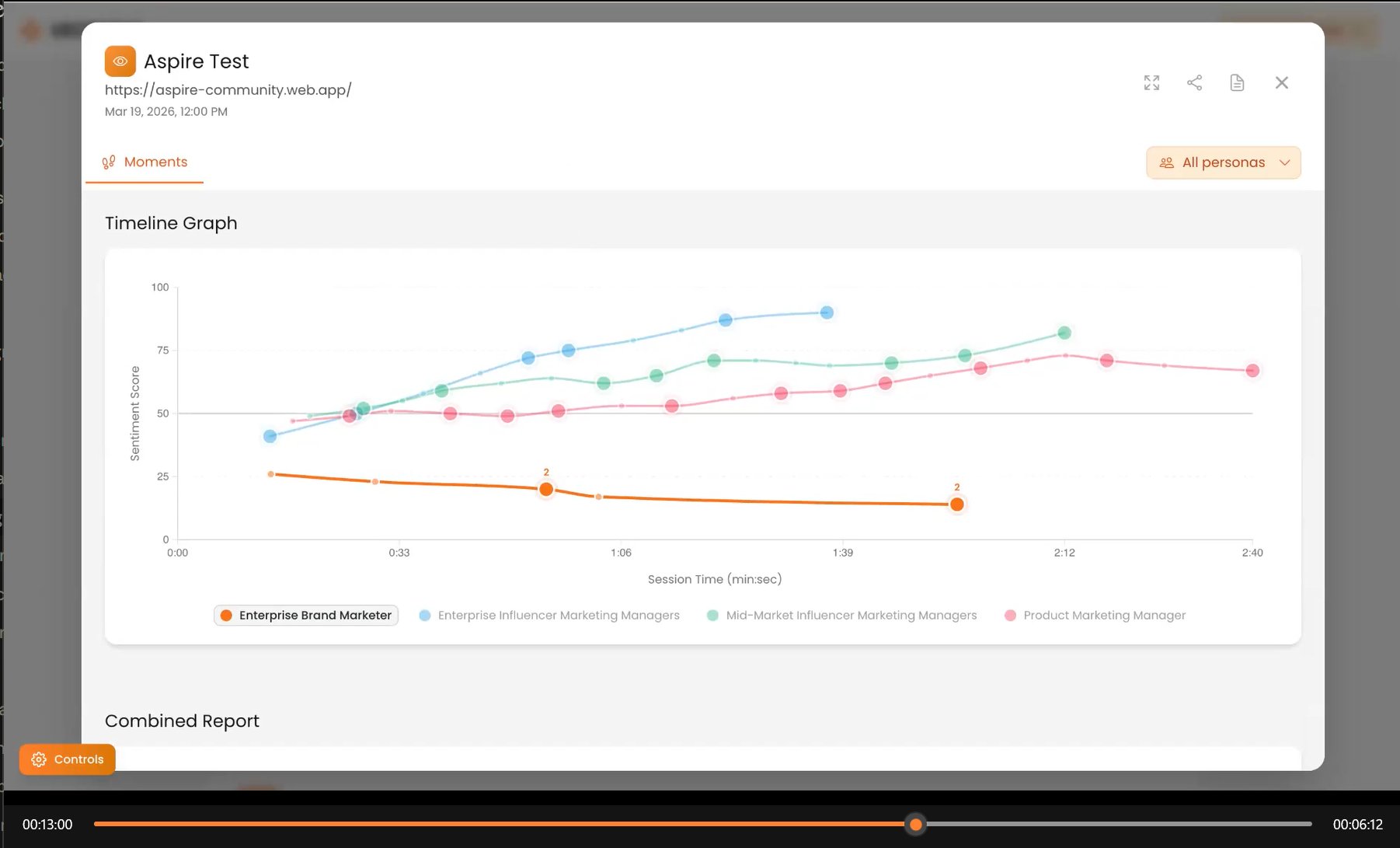
Synthetic Experimentation
When populations can be represented in this manner, simulation enables a new form of experimentation.
Instead of deploying every hypothesis directly to real users, candidate interventions can first be explored within synthetic populations. Messaging strategies, product changes, or pricing models can be introduced into simulation environments to observe how behavioral segments respond.
Real-world environments remain complex, and empirical experimentation remains necessary.
But simulation changes where experimentation begins.
Instead of exploring an unbounded space of possibilities directly with live populations, organizations can first test hypotheses within simulated populations whose behavioral structures are explicitly represented.
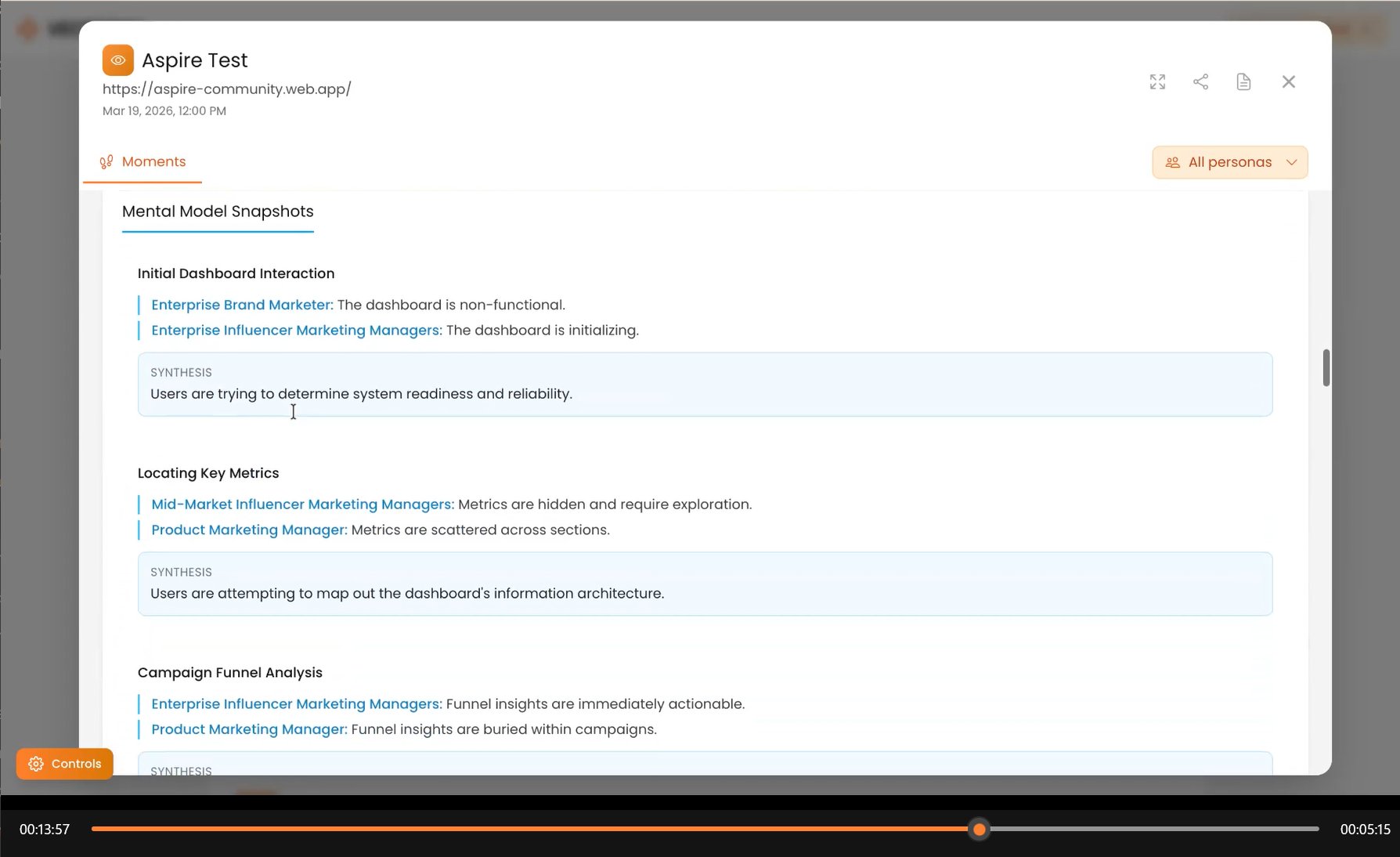
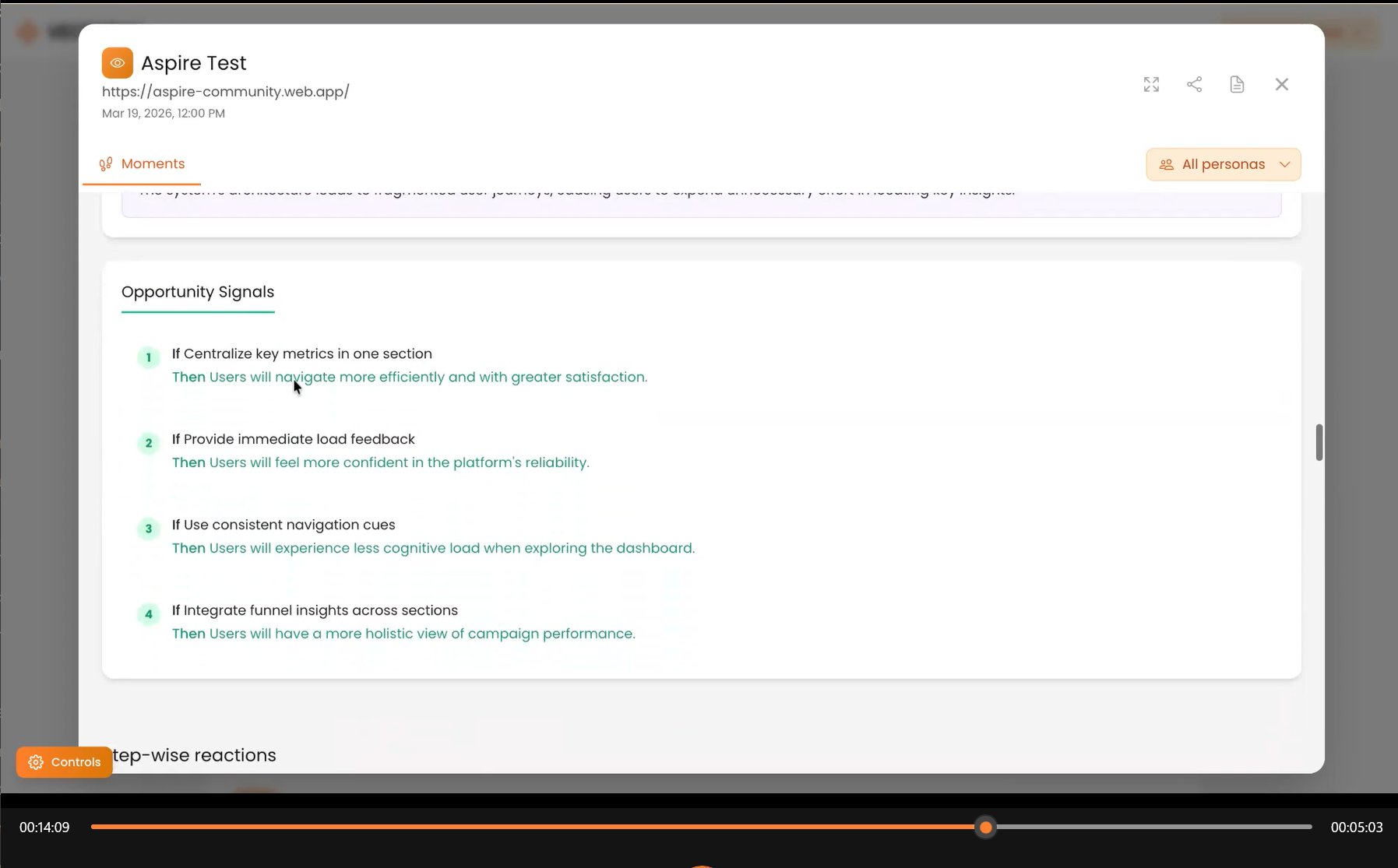
Real-world experiments then begin with far narrower uncertainty.
Toward Behavioral Infrastructure
Across the systems described in this series, a layered architecture begins to emerge.
SAPIENS models identity.
Episodic Memory models behavioral trajectories.
Telemetry and qualitative integration ground those models in real behavioral evidence.
Together they form the foundation for a new capability: synthetic populations capable of simulating how behavioral systems respond to new stimuli.
But the deeper implication is simpler.
Modern digital systems are already recording behavior continuously. Every interaction, conversation, and public discussion leaves a trace. These traces exist across products, enterprises, and social platforms.
Taken together, they form one of the largest observational datasets of human behavior ever created.
Until recently, these signals remained fragmented—scattered across analytics platforms, research archives, and public discourse.
When they are unified, they become something else entirely.
Not just behavioral data.
A foundation for modeling how populations think, react, and change over time.
The objective is not simply to analyze behavior.
It is to simulate it.